
Trump - AI Deals with Quantum Surge
The New Electricity Powering the Middle East’s Quantum Leap Forward

Welcome to my biweekly newsletter covering a range of topics within the deal making space. Join a bunch of curious folks within the dealmaking space here;
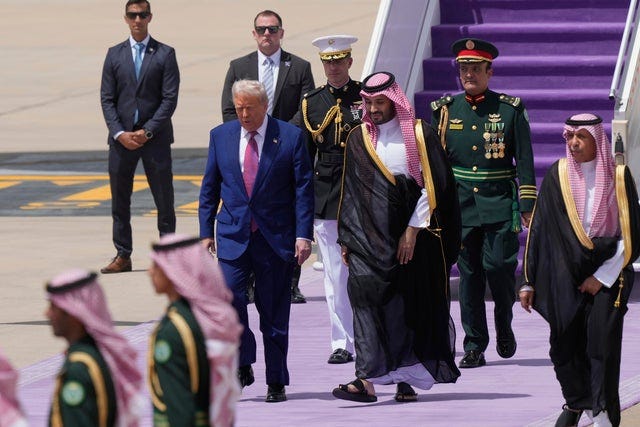
It's been a few weeks since President Trump's visit to the Middle East, and now that the media coverage has subsided, I wanted to delve into the long-term implications. A multitude of deals totaling $3.6 trillion have been made across Saudi Arabia, Qatar, and the UAE. While various themes such as AI, Infrastructure, Defence, and Energy are prominent, AI particularly captured my attention. I wanted to delve into the practical significance of these massive deals, including data centers and AI, to understand their impact on us and how they will shape the region and the world.
Artificial Intelligence is the New Electricity
Andrew Ng famously compared the impact of AI on the world to how electricity was back in the day. His discussion at Stanford back in 2017 resonates more than ever today. We can affirmatively say that AI isn’t just a buzz word anymore; it's a basic part of how digital stuff works. Just like electricity totally changed industries then and keeps making new things happen now, AI is doing the same.
Today we take something as simple as the light bulb very lightly (excuse the pun; I’m well known for dry Dad jokes) and the way in which we receive power, which is via commercial power plants that distribute electricity. As we know, electricity wasn’t invented; it always existed naturally. We just found ways over time to harness its power through our direct intervention. We progressed from understanding that electricity is different from magnetism to investing in the first battery, discovering electromagnetic induction, and finally creating the first commercial power plant.
AI, much like intelligence itself, also wasn’t invented; the concept of learning and reasoning has always existed in nature. We’ve found ways to scale this. We progressed from early neural network theories to building the first machine learning models, discovering deep learning breakthroughs, and finally creating scalable AI systems that drive industries worldwide.
What do these AI deals mean for the Middle East?
Two weeks ago, a flurry of deals across various parts of the AI Value Chain was announced, representing a phenomenal showcase of agreements poised to accelerate national progress. Similar to the harnessing of electricity in the 1900s, the Middle East is now embracing artificial intelligence, a move that will impact generations to come. The development of AI infrastructure can be compared to the build-out of electricity infrastructure, but on a scale and at a speed that is 100 times greater than what we have previously experienced.
Data centers are like power stations, fueled by data. The AI application layer will be an invisible intelligence layer that surges across the grid, powering everything we engage with. ChatGPT is like the light bulb, bringing value and increased productivity daily. We will fundamentally require less cognitive effort for many things, freeing up our minds to become more intuitive, creative, and free to build things for the next generation.
The scale and pace will be much faster, because if you think about a power distribution network, this takes a lot longer given the physical infrastructure required to distribute electricity, you need pylons and cables to run 100s of miles. Once a data centre is up and running, the distribution of the technology can be instantaneous as it flows invisibility through the internet.
What makes the middle east so well positioned for this?
Leadership and Innovation
AI data centers provide the computational backbone—high-performance computing, vast storage, and advanced GPUs—needed to train and deploy sophisticated AI models, akin to how electricity powered industrial machinery. The UAE’s G42, for example, is developing a 5-gigawatt AI campus in Abu Dhabi, the largest outside the U.S., in partnership with American firms, enabling the region to host cutting-edge AI research and applications.
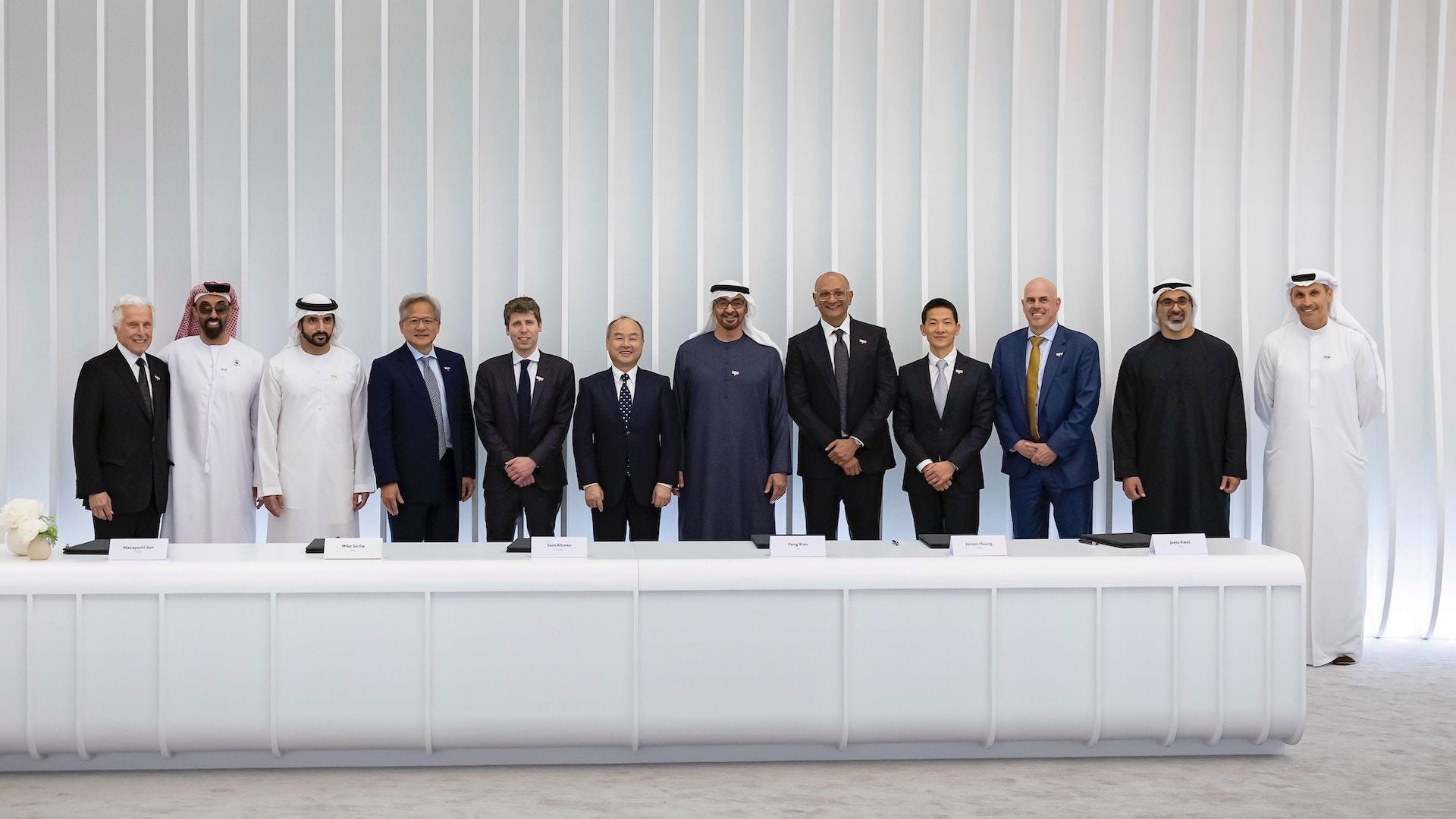
An example of a cutting-edge application is the deployment of self-driving vehicles. These vehicles will make decisions every millisecond, which will be safer and more efficient than humans driving. AI powers this, allowing the car to learn from a large amount of data that has to be processed through local compute and models that could be hosted within the region. One of the partnerships I’m most excited about (purely because of my deep involvement) is the Uber & Abdul Latif Jameel deal. This deal will accelerate the adoption of autonomous vehicles and create 30,000 earning opportunities for Saudi Nationals through the deployment of a next-generation fleet that includes both aspects.
Beyond autonomous vehicles, Saudi Arabia’s Humain, backed by the Public Investment Fund, is building “AI factories” with Nvidia’s advanced GPUs to develop Arabic-language AI models and cloud services. Why is this a significant milestone you might ask? Can’t chatGPT do everything I need, including complex tasks via Arabic. It can, but it won’t be great, and it’s not what a region like the middle east needs to accelerate.
Let’s take a model like ALLAM, the first Arabic-first language model. The model needs to be proactively exposed to a large diverse amounts of Arabic text, including formal (e.g., news articles, books), informal (e.g., social media, forums), and regional dialects (e.g., Egyptian, Gulf, Levantine Arabic). This requires dedicated effort and compute to create the infrastructure which great products and services can be built.
Furthermore, Quantinuum and Al Rabban Capital announced a $1 billion joint venture to advance quantum computing adoption in Qatar and the Gulf, expanding on Quantinuum's existing work with Hamad Bin Khalifa University and the Qatar Center for Quantum Computing. Quantum computing helps us solve problems in the world that existing supercomputers cannot. It’s tremendous to have focus on these types of latest technologies available to the youth, to develop this ecosystem.
These facilities position the Middle East at the forefront of next-generation technology, empowering Middle Eastern nations to develop indigenous AI solutions customized for regional demands, such as smart cities, autonomous vehicles, and healthcare innovations, with the potential for export to neighboring regions.
Strategic Positioning
The strategic location of the Middle East, bridging Europe, Asia, and Africa, makes it an ideal hub for AI data centers serving these areas, much like electricity grids connected distant regions. The UAE’s AI campus, for instance, can provide low-latency services to nearly half the world’s population within 3,200 km. By partnering with U.S. tech giants and securing access to advanced chips like Nvidia’s Blackwell GPUs, nations like Saudi Arabia and the UAE are aligning with these technology ecosystems.
Here’s a great clip of Chamath on the All In Podcast (one of my all time favourite podcasts) talking about the strategic positioning of the region and how the latest Trump visit is aimed at shifting the China <> US dynamic.
Infrastructure and Sustainability Advantages
The Middle East’s abundant energy resources, land availability, and business-friendly regulations mirror the scalability of electricity in enabling industrial growth. Countries like Saudi Arabia and the UAE leverage cheap energy and rapid permitting to build data centers quickly, unlike Europe’s power-constrained markets. For example, Saudi Arabia’s Cloud Computing Special Economic Zone (CCSEZ) offers tax incentives, projected to account for 30% of the nation’s ICT spending by 2030. Additionally, sustainability efforts, such as the UAE’s net-zero 2050 strategy and solar-powered data centers like Khazna’s in Masdar City, align with global environmental goals, ensuring long-term viability.
The Middle East is now uniquely situated to rapidly advance, signaling a shift away from regional conflict, towards peace and economic prosperity, as Chamath noted. This unprecedented economic alliance is driving technological innovation poised to generate widespread abundance, similar to the transformative impact of electricity in the early 1900s.
I’m excited that we get to be a part of this transformation, it’s really quite something.