
The difference between business development and sales
"It takes two flints to make a fire." — Louisa May Alcott, American novelist

I get asked this question a lot, given that sometimes these terms are used interchangeably. Don’t get me wrong, both approaches and careers have their place in an organization and can drive significant growth. There is no "one is better than the other"... just which one (or both) is better for you.
What is Business Development?
In "The Sumo Advantage" by Bernie Brenner, he says, ‘It’s not about selling more of an already-developed product or service to a waiting market. Instead, it’s about recognizing a market opportunity, envisioning what a solution might look like, and then pursuing established partners to completely own that market.’
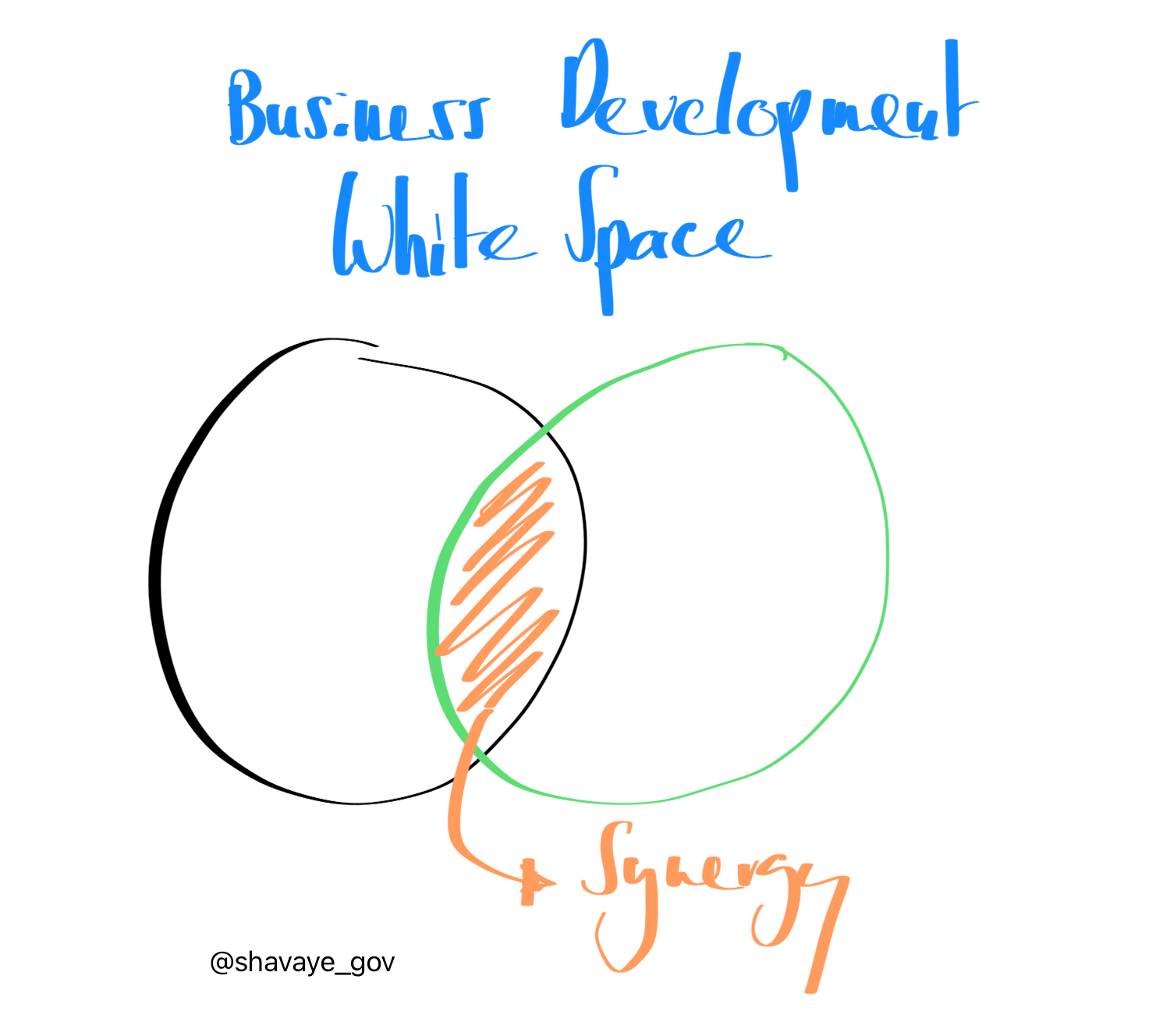
Business Development is about looking at the white space that exists between two partners by leveraging existing synergies that exist between them. In simple terms, this means, if we’re both great at something, can we tap into a new market that doesn’t exist today?
Nike & Apple Partnership
A great example of this is the partnership between Nike and Apple (I’ll dive deeper into this deal in the coming weeks). To summarize, Apple had recently launched the Apple Watch, a new wearable device, and looked at entering the fitness realm. Nike has a substantial market share within this market segment and could tap into the wearables market with one of the leading tech companies globally. Enter the white space for both brands… not long after their deal, the Apple Watch became the best-selling watch in the world, outselling the entire Swiss watch industry. Now, this is not entirely due to their partnership with Nike, but it definitely served as one of their core strategies given the brand perception and access to fitness-focused individuals (the partnership sales are not disclosed publicly).

Sales - specific with shorter cycles
Sales is about selling an existing product or service that has been developed for an identified market. Here, your in-house team has identified a need that either business, retail, or some combination of customers could use. Using Apple as an example, while they are not a traditional B2B company, they have created a B2B or Sales team that sells existing products and services to small businesses. They have identified an opportunity to sell into this market, and most strategies such as this require a ‘tailored’ approach leveraging a sales team to provide dedicated support and additional discounts. The biggest value a B2B customer receives here is a volume discount and dedicated support, and all Apple has to do is scale the team or sales strategies in order to increase revenue. The key difference here is that they are not entering a new market with a differentiated product, but rather a new segment that will leverage their existing products and services. The sales approach is just different. Sales has a much shorter deal cycle, typically ranging from 1 day to 12 months, while a BD cycle could take up to 3 years.
I know I may be oversimplifying this, as there are numerous examples of how companies create a specific product for a new market segment; however, the key difference is that sales ‘sells’ products while BD creates new markets in a more bespoke strategic manner.