
Preparation Increases Value
Unlock deal value before your first meeting. Prepare, prepare, prepare.

Welcome to the dealmakers digest. Join curious folks within the deal making space here;
I’m writing this article to give you my perspective on how to prepare for your first meeting. This might be a make or break situation for most dealmakers. The first meeting is the most critical to set yourself up for success. It’s not the end of the world if it goes pear shaped, however it will take you much longer to claw back your way, so do everything possible to make sure you put your best foot forward every time.
Studies consistently show that first impressions form fast—within seconds—and stick hard. A 2006 study by Janine Willis and Alexander Todorov at Princeton found that people judge trustworthiness, competence, and likability based on facial cues in as little as 100 milliseconds. In a business context, that means whoever you’re meeting—client, partner, or investor—has already sized you up before you’ve finished shaking hands.
Preparation is arguably the most important step, if you have two options, prepare for 10 mins or don’t prepare at all, that 10 mins could win over your deal. Why is it so important? For me personally I find that it gives me the confidence to maneuver in a meeting, think of your meeting as a dance, where you’re dancing with someone for the first time. If you only know the 1-2 step and your deal partner starts to do the waltz, then you're not going to win them over. Preparation gives you the confidence to make many moves, which you’ve learned in advance.
The meeting that started Nike
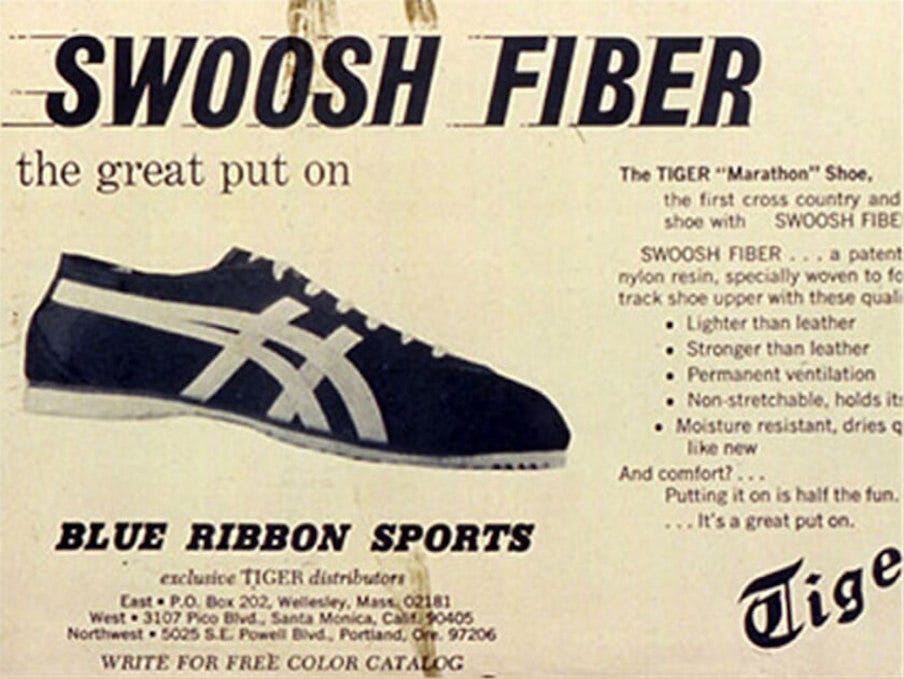
In what I think might be the greatest biography of all time, Shoe Dog, Phil Knight explains how he went about securing the Onitsuka distribution deal, which I would love to hone in on within this post. In a very quick summary, Phil Knight is the founder of Nike, before he started making them, he decided to import running shoes from Japan. At 24, fresh from Stanford’s Graduate School of Business, Phil was driven by a vision articulated in his MBA thesis: “Can Japanese Sports Shoes Do to German Sports Shoes What Japanese Cameras Did to German Cameras?” This paper, which analyzed the potential for Japanese running shoes to disrupt the U.S. market dominated by German brands like Adidas and Puma, gave him a strategic framework. Phil Knight’s first deal with Onitsuka Tiger in November 1962 was a pivotal moment that laid the foundation for what would become Nike.
So how did he prepare?
In Tokyo, Phil sought advice from expatriates running The Importer, a magazine. They provided critical cultural insights, warning him about Japan’s “culture of indirection,” where direct refusals are rare, and negotiations require patience and humility. This advice shaped his approach, cautioning him against being overly assertive. They also confirmed his interest in Onitsuka Tiger, a brand he’d identified as promising due to its quality and affordability. Knight then made a simple phone call to Onitsuka’s office in Kobe to secure an appointment—an action that reflects the era’s less formal business environment and his boldness despite limited resources.
Logistically, Phil traveled on a seven-hour train ride from Tokyo to Kobe in August 1962, standing for much of it due to crowded conditions. Clearly he prioritized his pitch over comfort. Mentally, he rehearsed his pitch during the journey, focusing on the U.S. market’s potential and Onitsuka’s ability to undercut German brands. His runner’s background (with a personal best of 4:13 in the mile) gave him a personal connection to the product, allowing him to speak authentically about the importance of quality shoes.
The first engagement took place at Onitsuka’s headquarters in Kobe, where Phil met with Onitsuka executives including export manager Ken Miyazaki, without a formal company name. When asked whom he represented, he improvised, recalling blue ribbons from his childhood track victories, and named his nonexistent company “Blue Ribbon Sports” (BRS). This spur-of-the-moment decision was a bold bluff, but it worked because Onitsuka was keen to expand internationally and saw Phil as a potential entry point to the U.S. market.
Phil pitched the idea that the American shoe market was ripe for disruption. He argued that Onitsuka’s Tiger shoes, with their high quality and lower price point, could penetrate U.S. stores and compete with Adidas and Puma. His Stanford research backed his claim, though he presented it without a formal presentation. His passion as a runner likely added authenticity, bridging the gap between his lack of credentials and his bold vision.
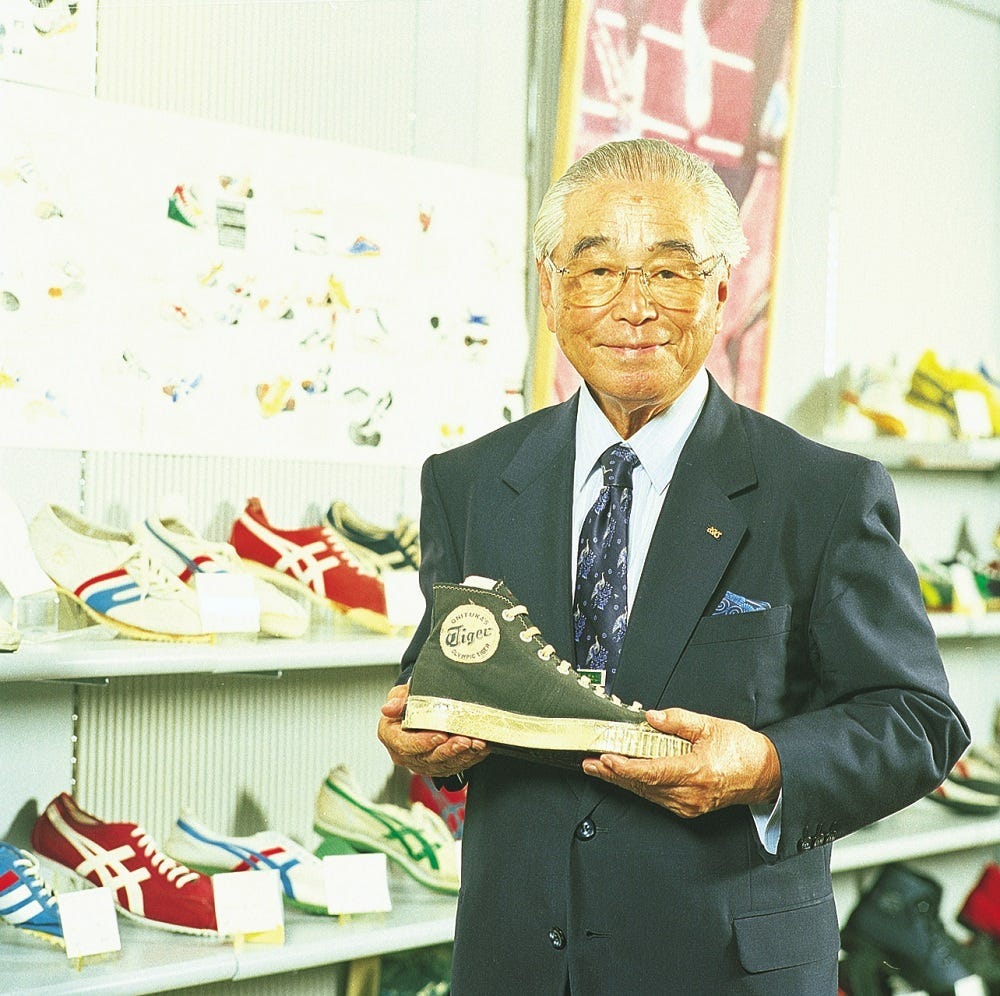
The Onitsuka executives were receptive, partly because they had been considering U.S. expansion. After two hours, Miyazaki and Phil reached an agreement: Phil would represent Onitsuka Tiger as a distributor in the western United States. The deal was sealed with a handshake, and he was asked to have his father send a $50 money order to initiate a shipment of sample shoes to Portland, Oregon. This low initial investment reflects Onitsuka’s willingness to take a chance on a young, unproven entrepreneur, possibly due to Kihachiro Onitsuka’s (pictured below) own entrepreneurial spirit and empathy for Knight’s ambition.
What should you do to prepare?
Define Your Objective
Before any meeting, clarify what you aim to achieve. If you’re unsure, try the “Fisherman’s Test.” When a fisherman returns from weeks at sea, their reward isn’t just the fish they catch—it’s the joy and approval of their family when they bring home their haul. Similarly, imagine returning to your office: What outcome would earn that same enthusiastic reaction from your team or management? What would they consider your “big fish”? That’s your objective for the meeting.
Some might argue only closing the deal counts as a win. Use your judgment—while you may not finalize the deal in one meeting, what other significant milestone could you achieve? A signed term sheet? A follow-up commitment? Identify what matters most.
Phil Knight exemplified this clarity when he met with Onitsuka Tiger. His objective was clear: secure distribution rights for their shoes in the U.S. Despite not yet having a formal company, he focused on the goal, trusting that details like incorporation could be resolved later—a bold move that paid off.
People Before the Company
Research the individuals attending the meeting. Go beyond their job titles—explore their backgrounds, personal interests, hobbies, and accomplishments. Platforms like LinkedIn often reveal professional milestones, while social media might highlight their passions. If they’ve spoken at a conference or on a panel (especially if footage is available online), watch it. This free resource reveals their tone, behavioral cues, and key areas of interest, giving you a strategic edge in building rapport.
For Phil Knight, this meant engaging with local expatriates in Japan to understand the cultural nuances of Japanese business negotiations. These insights shaped his approach, preparing him for Onitsuka’s unique style of deal-making.
Then Understand the Company
Next, dive into the company’s goals and objectives. Has their strategy shifted recently? For example, are they expanding into new markets or doubling down on innovation? At a macro level, consider their role in the broader economy. Are they backed by government initiatives or positioned to dominate a specific sector?
Equally critical is understanding their competition. Research competitors’ strengths and weaknesses to gain perspective on the company’s market position. Use this knowledge tactfully in discussions—strike a balance between showing commitment to the partnership and subtly signaling you have other options.
Phil Knight’s preparation was rooted in deep research. His Stanford Graduate School of Business paper, “Can Japanese Sports Shoes Do to German Sports Shoes What Japanese Cameras Did to German Cameras?”, analyzed Japan’s economic landscape and identified opportunities to challenge dominant players like Adidas and Puma. This groundwork gave him a nuanced understanding of Onitsuka’s potential and the competitive dynamics at play.
I hope I’ve given you some inspiration to focus on preparation. In a deal making environment or just about any, it’s one of the critical variables that you have control of which can 10x your probability of success.
Stay ready.
Shavaye