
How to Read Body Language: The Skill That Wins Deals (Part 2)
The signals you’re missing are costing you more than you think

Welcome to my biweekly newsletter covering a range of topics within the deal making space. Join a bunch of curious folks here.
This is the second part of the ‘How to read Body Language; series. Check out part 1 if you haven’t yet, where I’ve laid some of the foundations to this post.
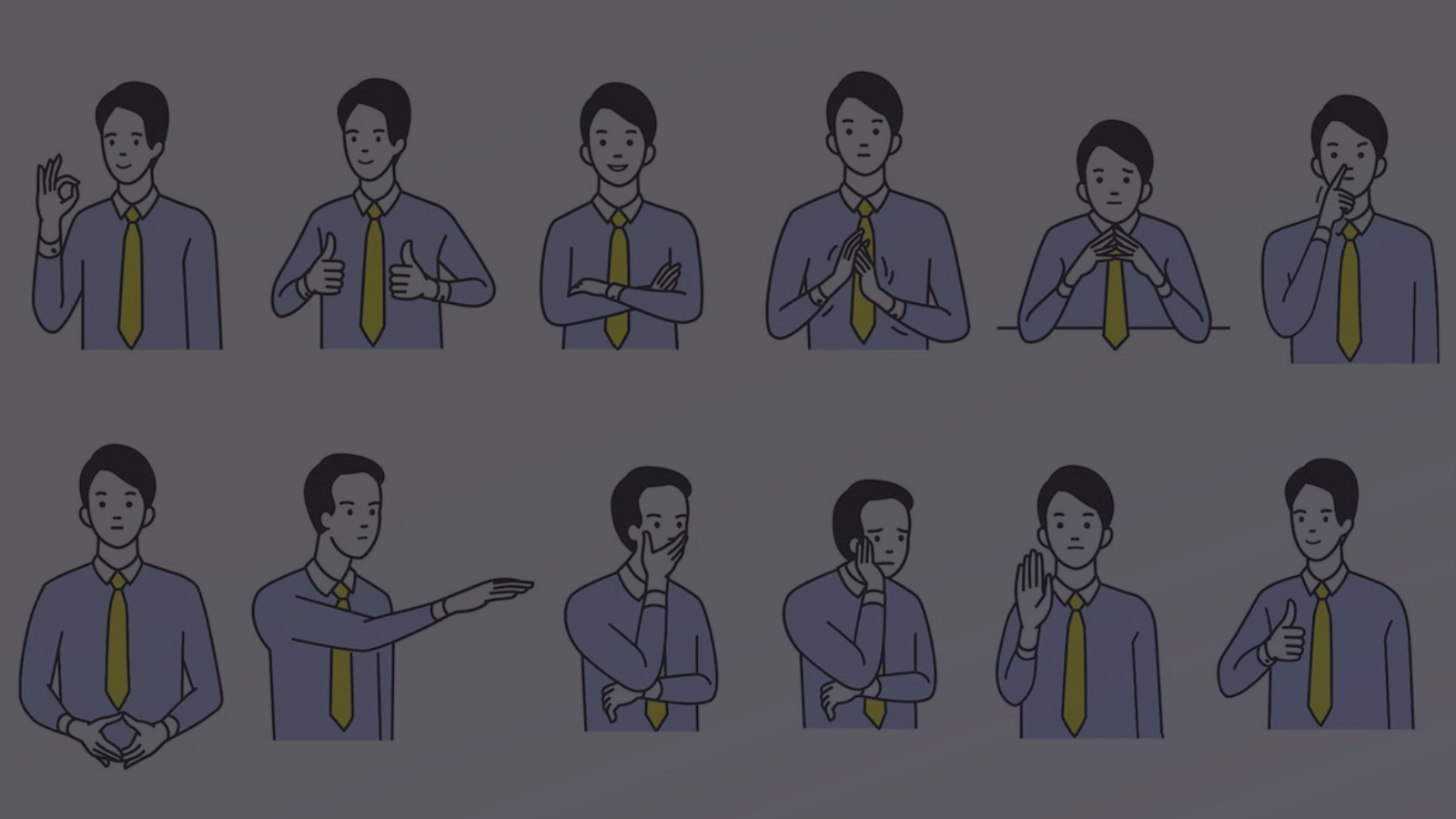
You’ve been in that room.
The pitch went well. The energy was good. You shook hands, exchanged pleasantries, walked out thinking “we’ve got this one.” Then the follow-up emails go quiet. The calls don’t get returned. Three weeks later, someone tells you they went with another partner.
And you’re sitting there trying to figure out what happened.
Here’s what I’ve realized since diving into this stuff: the deals I’ve lost weren’t lost because of bad offers. They were lost because I was only paying attention to half the conversation. I was listening to words while the room was screaming at me through posture, hand movements, and micro-expressions I completely missed.
If any of this sounds familiar and if you’ve ever been blindsided by a “no” that came out of nowhere, if you’ve misjudged a room because everyone was nodding politely, if you’ve pushed harder on a point when you should’ve pivoted, then you’re leaving money and relationships on the table every single time you walk into a meeting.
And the uncomfortable truth? The person across from you who does read these signals is adjusting in real time. They’re catching the discomfort you’re missing, softening their approach, addressing the objection before it’s even spoken. They’re not smarter than you. They’re just reading the full conversation.
In Part 1, I shared three foundational principles from Joe Navarro’s What Every Body is Saying which is establishing baselines, watching for comfort vs. discomfort, and looking for clusters. If you haven’t read that, have a look and start there.
This time, I want to go further. I want to show you what this actually looks like in practice. Like the specific signals I’ve started watching for, the ones that have already changed how I negotiate, and the simple protocol I now run in every meeting.
The Negotiation That Should Have Fallen Apart
A few months ago, I was deep in a partnership negotiation. Multi-party, complex terms, the kind of deal that takes weeks to close. On paper, the first session went smoothly. We’d done our homework, the deck was tight, and the initial responses were positive.
But I’d been studying Navarro’s framework obsessively at this point, so instead of just running my usual playbook, I gave myself a job beyond presenting: observe.
The first thing I noticed was during the small talk before we got into the real content. The lead negotiator on the other side was relaxed — leaning back, arms open, feet flat on the ground. That was his baseline. Calm, measured, comfortable.
Then we got into the terms.
When we brought up exclusivity, his torso rotated maybe ten or fifteen degrees away from the table. Subtle. If you weren’t watching, you’d miss it entirely. His words were still “yeah, let’s explore that.” But his body had already registered disagreement. He’d gone from facing us squarely to blading away, this is what Navarro calls “ventral denial.” When we like what we’re hearing, we face people openly. When we don’t, we turn away, sometimes by just a few degrees.
I made a mental note and kept going.
Then pricing came up. This time it was the lips. They tightened. Not dramatically — he didn’t grimace or shake his head. His lips just got thinner. For about two seconds, they practically vanished. Navarro writes about lip compression as one of the most universal stress indicators. The brain is essentially saying “shut it down, something’s wrong here.” And it happens so fast that most people across the table never catch it.
I caught it.
The third signal came on timelines. I proposed an aggressive launch window and his feet, which had been gently bouncing since we started (his normal rhythm), went completely still. A foot freeze. Navarro explains that when someone who’s been moving their legs suddenly stops, the limbic brain has kicked into its most primitive response, which is freeze. Something I said triggered a threat response.
So I had three data points in about twenty minutes. Exclusivity: torso lean away. Pricing: lip compression. Timelines: foot freeze. That’s a cluster. And clusters reveal the full truth.
Here’s what I did differently than I would have a year ago: I didn’t push through. I didn’t add more slides or pile on logic. I paused and got curious.
I said something like, “I want to make sure we’re building something that works for both sides. Before we go further, is the structure we’re proposing sitting right with you, or should we rethink some of these pieces?”
He exhaled. Visibly relaxed. And then he told me the real concerns, which were things he hadn’t planned to bring up until much later, probably over email where it’s easier to say no. The exclusivity terms felt too restrictive for their other partnerships. The pricing model needed a different structure. And the timeline was unrealistic given their existing priorities.
We reworked all three in that same session, which allowed us to close the deal not long after.
If I hadn’t been watching, I’d have walked out of that first meeting thinking everything was great. The “no” would’ve come by email three weeks later, dressed up as “shifting priorities” or “not the right timing.” I’ve seen that movie before. This time, I caught the signals and changed the ending.
The Four Signals I Now Watch For In Every Deal
After experiencing many meetings like I’ve discussed above, I’ve narrowed my focus to four nonverbal signals that come up most consistently in deal-making contexts. These aren’t the only ones that exist(Navarro’s book covers dozens), but these are the ones I’ve found most practical and most frequent in the rooms I’m in.
1. The Torso Lean
The torso carries our vital organs, so the brain is extremely protective of it. When we feel safe and in agreement, we face people squarely and openly, what Navarro calls ventral fronting. When something shifts, even slightly, we blade away.
This is the one I watch first because it’s the earliest signal. Before someone’s face reacts, before their hands move, their torso has already voted. It can be as subtle as a five-degree rotation. In a boardroom, you’ll see people who were leaning slightly forward suddenly pull back to neutral or angle away. They might not even notice they’re doing it.
The deal-making application is straightforward. When you’re presenting terms and you see someone’s torso shift away from you… even slightly, that’s where the real conversation needs to happen. Don’t wait for the verbal objection. It might never come. They’ll just go quiet and you’ll get ghosted.
2. The Foot Freeze (or Happy Feet)
This was the biggest surprise for me in Navarro’s book. The feet are actually the most honest part of the body. We’ve been taught since childhood to manage our faces and to some extent our hands, but nobody thinks about their feet. The limbic brain has been controlling our lower limbs for survival for millions of years and we have almost zero conscious awareness of what they’re doing.
Two things to watch for. First, happy feet which are bouncing, wiggling, energetic movement which signals positive emotions. If you float an idea and their feet start bouncing, they like it. Second, the foot freeze which is sudden stillness in someone who’s been moving. That’s the limbic freeze response kicking in. Something just registered as a threat.
The practical challenge is that you often can’t see feet under a table. But here’s the workaround: if someone’s bouncing their legs, their shoulders and shirt will vibrate slightly. Watch for that micro-movement above the table or on Zoom calls. Even though people are not showing their feet, if it’s moving you, can tell on a video call. And when it suddenly stops, pay attention to what was just said.
3. Hand Confidence Shifts
Hands get disproportionate attention from the brain which is an evolutionary carryover from needing to quickly assess whether someone was holding a weapon or offering food. Two specific hand behaviors have been the most useful for me.
The first is steepling which is, fingertips pressed together, palms apart. This is the highest confidence hand display there is (think of it like making a pyramid with your hand). Lawyers, judges, and executives do it instinctively when they feel sure of their position. The second is the collapse of the steeple into interlaced, wringing fingers. That transition happens in a split second and it tells you the exact moment doubt entered someone’s mind.
Watch the hands during any back-and-forth on terms. If the other party is steepling while they present their counter-offer, they believe in it. If their steeple collapses when you push back, they’re not confident they can hold that position. That’s where you have room to negotiate.
The other thing… and this one’s simple but powerful… keep your own hands visible. Research backs up what Navarro teaches from his FBI experience: when people can’t see your hands, they subconsciously trust you less. Hands under the table, behind the back, or stuffed in pockets create unease. Visible hands, relaxed and open, signal “I have nothing to hide.”
4. Lip Signals
I’ve grouped two distinct mouth behaviors together because they come up constantly and they mean different things.
Lip compression which is when the lips tighten and seem to vanish. This is a stress response. The brain is processing something negative. It’s universal and it’s involuntary. If you see it during a contract review or pricing discussion, the person is troubled by what they just heard.
Lip pursing which is the lips push outward and together, almost like a soft pout (think Instagram model pout) actually means something different. It signals disagreement or that the person is forming an alternative idea. This is actually a more optimistic signal than compression. Pursed lips often mean “I don’t agree with what you’re proposing, but I have a counter in mind.” That’s an opening, not a wall.
In practice, the distinction matters. Lip compression means “stop and address this.” Lip pursing means “stop and ask what they’d propose instead.” Both require you to pause. But the follow-up question is different.
My Meeting Protocol
All of this is useless if you don’t build it into a habit. Here’s the simple protocol I’ve been running for the past few years. It takes no extra time and it’s just a shift in where I put my attention.
Before: I think about who’ll be in the room. If I’ve met them before, I recall their normal energy such as how they sit, where their hands usually rest, their general posture. That’s my baseline reference. If it’s a first meeting, I know the first five minutes are my window to establish one.
First five minutes: I don’t push into substance immediately. I let the room settle and I observe. I’m noting default posture, hand placement, facial tension levels, and overall energy. This is my “normal” snapshot. Everything after this gets measured against it.
During the substance: When we get to the contentious stuff like pricing, terms, exclusivity and timelines, I split my attention. Part of me is presenting. Part of me is scanning. Torso shifts. Hand transitions. Lip signals. Foot freezes. If I see a cluster of two or more discomfort signals at the same moment, I know I’ve hit something real.
The pivot: When I catch a cluster, I don’t push harder. I get curious. Something like “I want to make sure this works for both sides… how does this piece feel to you?” or “I’m sensing some hesitation here. What would work better?” Nine times out of ten, the other person opens up with the real concern. They’re often relieved someone noticed.
After: I debrief with myself, sometimes on the walk to my car. What did I observe? When did the energy shift? What was being discussed at that exact moment? This is where the real intelligence lives. The patterns you notice across multiple meetings start compounding into intuition.
Why This Compounds
Here’s what nobody tells you about this skill. It doesn’t just help you in the meeting where you spot the signal. It changes how you prepare for the next meeting with the same person. You start building a library of how individuals respond to different types of pressure. You learn that one partner always compresses his lips on pricing but never on timelines. You learn that another person’s feet go still whenever legal terms come up. Over time, you’re reading specific people with increasing accuracy.
Navarro spent twenty-five years at the FBI refining this. He caught spies, solved arson cases, and identified murderers using these same principles. We’re not doing that. We’re trying to close partnerships and structure deals. But the underlying science is identical, watch the body, read the discomfort, ask the right question.
The best deal makers I’ve met all have this in common. They watch more than they talk. They notice the shift before it becomes an objection. And they have the discipline to pause and get curious instead of pushing through.
Unlike most competitive advantages, this one gets sharper every time you use it.
If you found this useful, forward it to someone who’d benefit. And I’d genuinely like to hear from you — if you’ve started applying anything from Part 1 or Part 2, reply to this email and tell me what you noticed. Your observations might make it into a future post.